

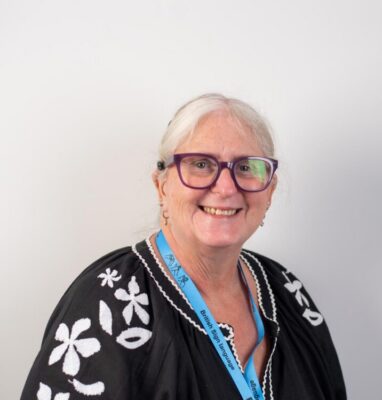
 Amanda Smith shares some insights on Deaf Learners as Multilinguals
Let me start by introducing myself. My name is Amanda Smith I am profoundly deaf and have a cochlear implant. My preferred language is British Sign Language (BSL) and written/spoken English is my second language; I am one of 151,000 BSL users in the UK (British Deaf Association, 2026).
I am an associate professor and programme lead for BSL and deaf studies at York St John University. I have taught BSL for 26 years to undergraduates and people external to the university. The prevalence of deaf people has increased and 2.4 million adults in the UK have a level of hearing loss (RNID, 2025).
Choosing language, choosing education
Parents of a deaf child are faced with many choices to make about their child’s language, communication, audiological support and education; there is a lot of information to take on board and many decisions to make that will provide their child with the best start in life. For example, parents may decide that their child will use their residual hearing and learn to speak/listen as much as they can – the oral approach, others may decide to use BSL with their children (Napoli, 2015). These decisions are not only about communication, but also about language development, identity, belonging, and educational access.
In my personal situation, professionals (who were not deaf) told my parents to use the oral approach with me and told them not to use BSL with me. I initially attended a mainstream school that had a very small provision for deaf children (there were only 5 deaf children in the entire school). I was not happy there and my learning fell behind that of my hearing peers; deaf children are at risk of exclusion by inclusion (Jarvis, 2007).
Learning to listen as best I could and speak was difficult; accessing spoken phonology was challenging for me because I could not consistently hear all the phonemes in words, which affected spelling and literacy development. Like many multilingual learners, I was expected to access curriculum content through a language modality that was not fully accessible to me. The support that I received in school was limited and it did not feel like ‘inclusion’. I was excluded from lots of information around me, including poor access to incidental learning and peer relationships. I tried to augment listening with lip-reading; I completely agree with the statement that lip-reading is 80% is guesswork – it is tiring and ‘listening fatigue’ is a real thing! (Bess & Hornsby, 2014).
These experiences highlight how inclusion cannot simply mean physical placement in mainstream classrooms. For multilingual learners, including deaf learners navigating BSL and English, inclusion also depends on language access, opportunities for participation, social interaction, and recognition of linguistic identity.
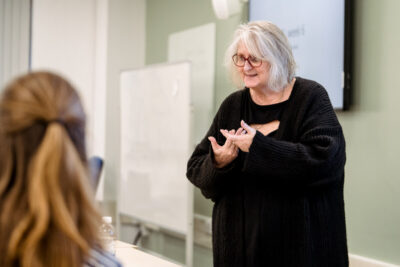
My parents realised that mainstream school was not the best choice for me and made the decision to move me to a school for deaf children; I was amazed when I went there, as all the deaf children were deaf just like me! The children and some teachers used BSL, whilst others used gestures to try to make themselves understood. Whilst I was here, I decided that I wanted to become a teacher. It was not until I left school that I found a two-year course designed specifically for deaf people that enabled me to become a qualified teacher of BSL. I began teaching BSL at college and then later at university; it is here that I have developed the BSL programmes to enable students to not only gain a degree but also external qualifications with Signature in BSL.
Deaf learners as multilingual learners
Learning BSL does not affect someone’s ability to learn to listen/speak or write English – in fact it enhances it; not providing good language role models for deaf children can lead to language deprivation with far-reaching consequences on the deaf person’s life outcomes (Hall, 2017; Gulati, 2018). I wholly support campaigns to add BSL learning to the national curriculum, providing deaf and hearing people the opportunity to gain a qualification in BSL but also help change attitudes and perspectives towards a linguistically rich minority (Signature, n.d.). Recognising deaf learners as multilingual learners is important not only for educational inclusion but also for challenging assumptions about language, communication, and identity. Greater visibility of BSL within schools and the curriculum has the potential to benefit both deaf and hearing communities alike. It encourages teachers to think more carefully about language access, multimodal communication, and inclusive classroom practice. There are important overlaps between EAL and Deaf education, particularly in relation to identity, translanguaging, language development, and participation. Greater dialogue between these fields has the potential to strengthen inclusive practice for all learners.
References:
Bess, F. H., & Hornsby, B. W. Y. (2014). Commentary: Listening can be exhausting—Fatigue in children and adults with hearing loss. Ear and Hearing, 35(6), 592–599.
British Deaf Association. (2026). Help & resources – BSL statistics. British Deaf Association. https://bda.org.uk/help-resources/
Gulati, S. (2018). Language deprivation syndrome. In Language deprivation and deaf mental health (pp. 24–53). Routledge.
Hall, W. C. (2017). What you don’t know can hurt you: The risk of language deprivation by impairing sign language development in deaf children. Maternal and Child Health Journal, 21, 961–965. https://doi.org/10.1007/s10995-017-2287-y
Jarvis, J. (2002). Exclusion by inclusion? Issues for deaf pupils and their mainstream teachers. Education 3-13, 30(2), 47–51. https://doi.org/10.1080/03004270285200231
Napoli, D. J., et al. (2015). Should all deaf children learn sign language? Pediatrics, 136(1), 170–176.
RNID. (2025). Prevalence of deafness and hearing loss. RNID. https://rnid.org.uk/get-involved/research-and-policy/facts-and-figures/prevalence-of-deafness-and-hearing-loss/
Signature. (n.d.). GCSE in British Sign Language (BSL). Signature. https://www.signature.org.uk/gcse-in-bsl/
Find out more about multilingualism
- Join one of our Regional or Special Interest Groups
- Learn more about the last NALDIC annual conference
- Do you have a story to share? Write a post for the NALDIC blog