

Initial Teacher Educator Dr Beth Marley reflects on a week of learning for student teachers and researchers from across Europe
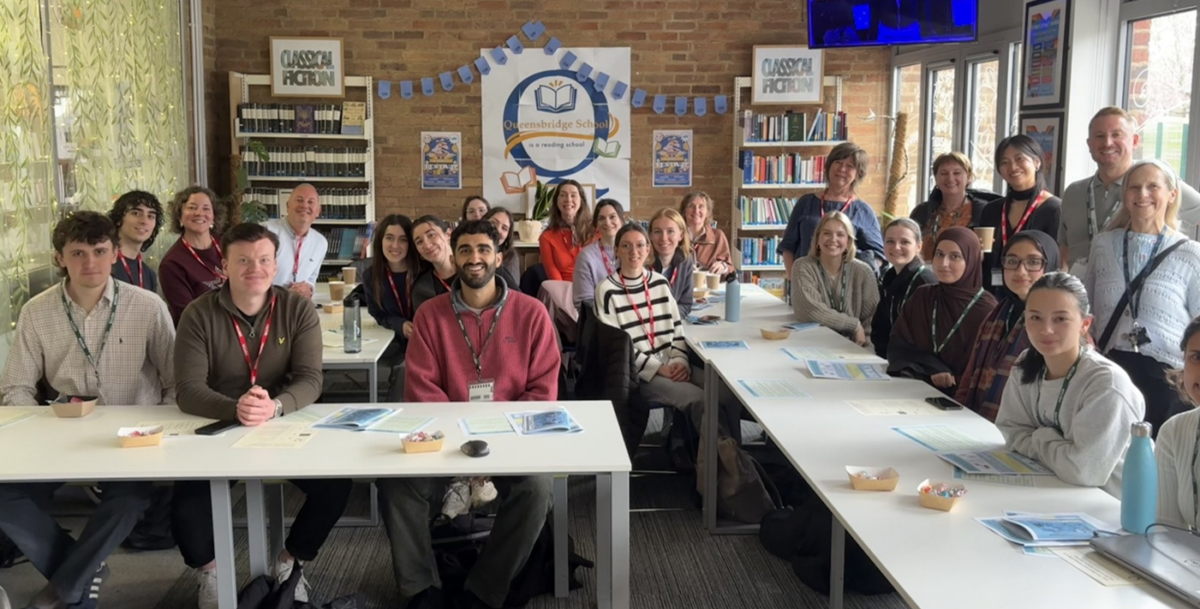
Working with student teachers on the PGCE Primary and in our diverse city of Birmingham, we recognised the need for student teachers to develop their understanding and confidence in inclusive teaching for multilingual learners. Colleagues in Initial Teacher Education in other European universities felt the same and so we organised a ‘Multilingualism in the Classroom’ week in April at the University of Birmingham. International student teachers and researchers came together to exchange ideas and learn from one another in a rich programme of presentations, seminars and discussion about practice and policy for pupils with additional languages across Europe. The student teachers were also able to experience some local Birmingham culture, including a trip on our canals and a Curry night out!
Visiting schools
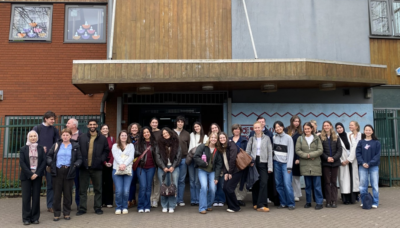
Sharing experiences and ideas at an international level really helped us to develop an understanding of strategies to support learners, and the importance of carefully considering different contexts and prior experiences of individuals in classrooms. During the week, we visited 2 of our brilliant schools in Birmingham, Somerville Primary School and Queensbridge Secondary School, to hear about the schools’ approaches. These visits were fascinating and highlighted the commitment of our teachers in supporting EAL learners, as well as giving the student teachers ideas and inspiration for resources to use in their own classrooms. Classroom observations provided insights into how these approaches are integrated into daily school routines and teaching. The use of bilingual dictionaries and talk buddies were just some of the many ideas and resources suggested!
Learning from research
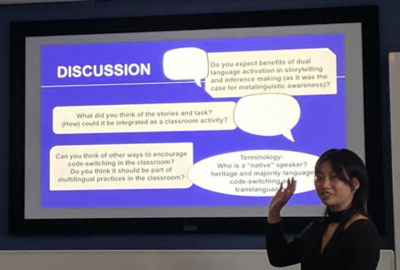
Academics from the different universities presented their research and the student teachers found these to be very engaging sessions, which helped them understand the reasoning behind different approaches, as well as inspiring deeper value for children’s L1 exploration of how to use translanguaging in their future classrooms. Researchers from Spain gave a presentation to raise awareness of the challenges and opportunities that a multilingual classroom in a multilingual context can present for foreign language teaching. A Swedish research project to strengthen multilingual children’s motivation to use L2, and a project exploring how teachers can assess metalinguistic awareness and use translanguaging engaged all participants.
Finding similarities
Student teachers started the week with their own short presentations on policy and approaches in their own locality. Although policy varied, there were key similarities in practice internationally. Student teachers agreed that there was a common holistic view of the child or young person, stating:
‘we try to take the student as a whole person’
‘we look at the child as a whole, valuing their cultural and linguistic background’.
There was agreement that in all countries the collaboration between teachers and researchers, and importantly families, was crucial to improve learning and teaching for multilingual learners. They described effective teachers as ‘kind’, ‘enthusiastic’, ‘caring’ and ‘compassionate’, who were doing their best for the child.
A key theme was the importance of the individual teacher’s understanding and commitment to supporting multilingual learners. After seeing practice in our Birmingham schools, some commented on what they felt was a lack of multilingualism specialists and under funding in their own countries. However, one commented,
‘…. but materials are being developed and there are many teachers engaging and supporting change!’
This again highlighted the importance of the individual teacher and reflected the enthusiasm and commitment of all the student teachers during the week, to initiate change and improvement in their future teaching. It was heartening to see the compassion for and commitment to multilingual learners in our Birmingham schools and in the student and future teachers who participated in ‘Multilingualism in the Classroom’ week. We hope to keep the conversation going!
Find out more about multilingualism
- Join one of our Regional or Special Interest Groups
- Join us for the 34th NALDIC Annual Conference
- Do you have a story to share? Write a post for the NALDIC blog